
Difference Between Piles and Fissure: What Your Pain and Bleeding Are Telling You
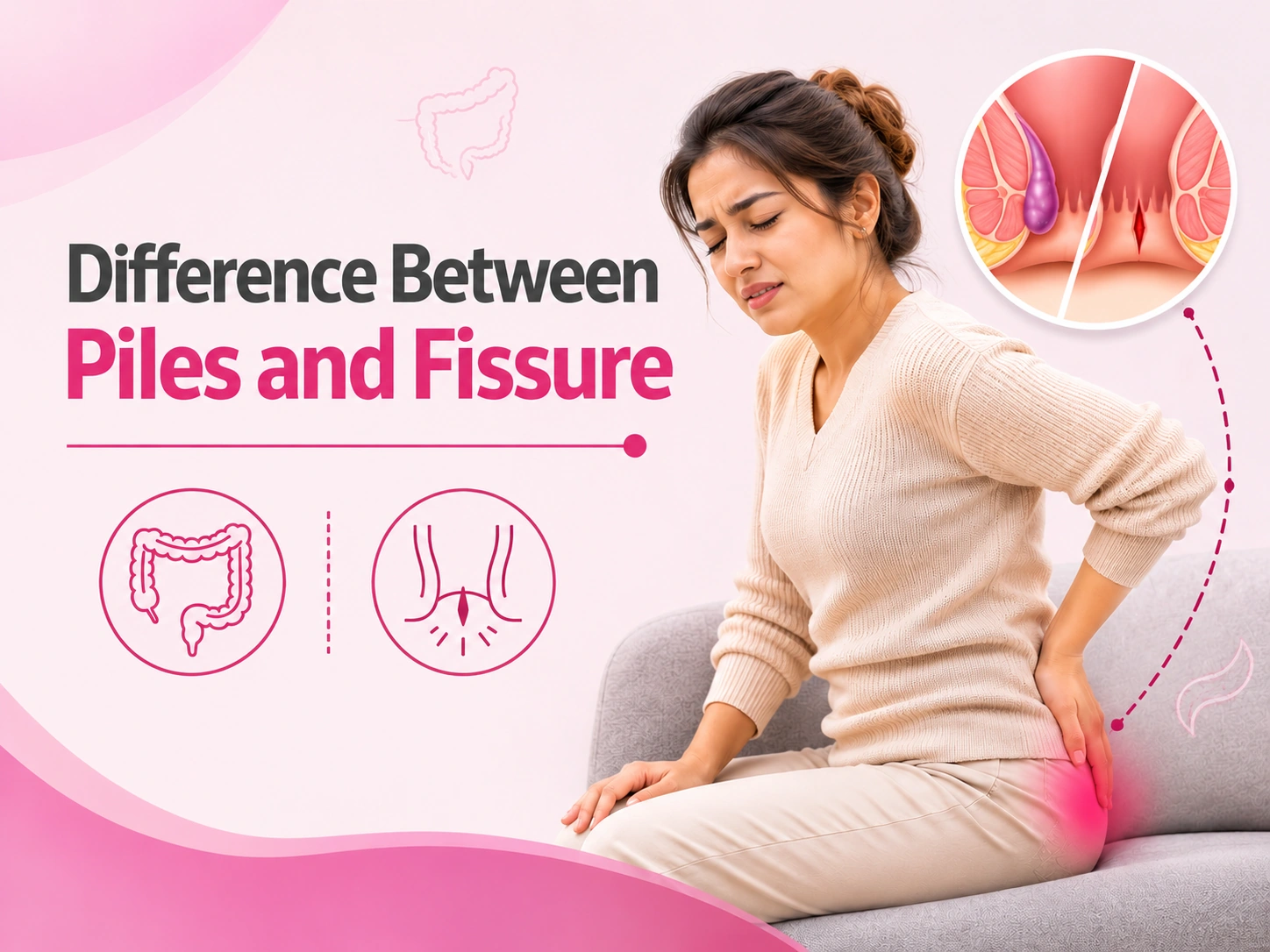
Key Takeaways
- Piles are swollen blood vessel cushions; a fissure is a tear in the lining of the anal opening.
- Sharp pain during and after passing stool points more towards a fissure; painless bleeding or a lump points more towards piles.
- A small skin tag at the edge of an old fissure is often mistaken for piles.
- Bleeding with a change in bowel habit, dark stool, weight loss or unusual tiredness needs a doctor's check, not another cream.
You step out of the bathroom, and your eyes are still watering.
Passing stool felt like passing something sharp knife like, and when you look at the tissue, there is a streak of bright red blood.
Even after washing up, the pain lingers.
Now, you have a long local train ride to work, and just thinking about sitting through the journey makes you wince. You stop by the chemist, who hands you a piles cream without asking many questions.
But one doubt stays with you: is this really piles?
This confusion is more common than you might think. Piles and anal fissures affect the same area, with or without pain, bleeding, and discomfort during bowel movements. However, they are different conditions, and the signs that point to one may differ from those of the other. Understanding the difference between piles and fissures can help you recognise the symptoms, avoid relying on the wrong treatment, and know when it is time to seek medical advice.
This guide explains how piles and fissures differ, the symptoms you may notice, and when you should get checked by a specialist.
Piles or fissure: what is actually happening down there?
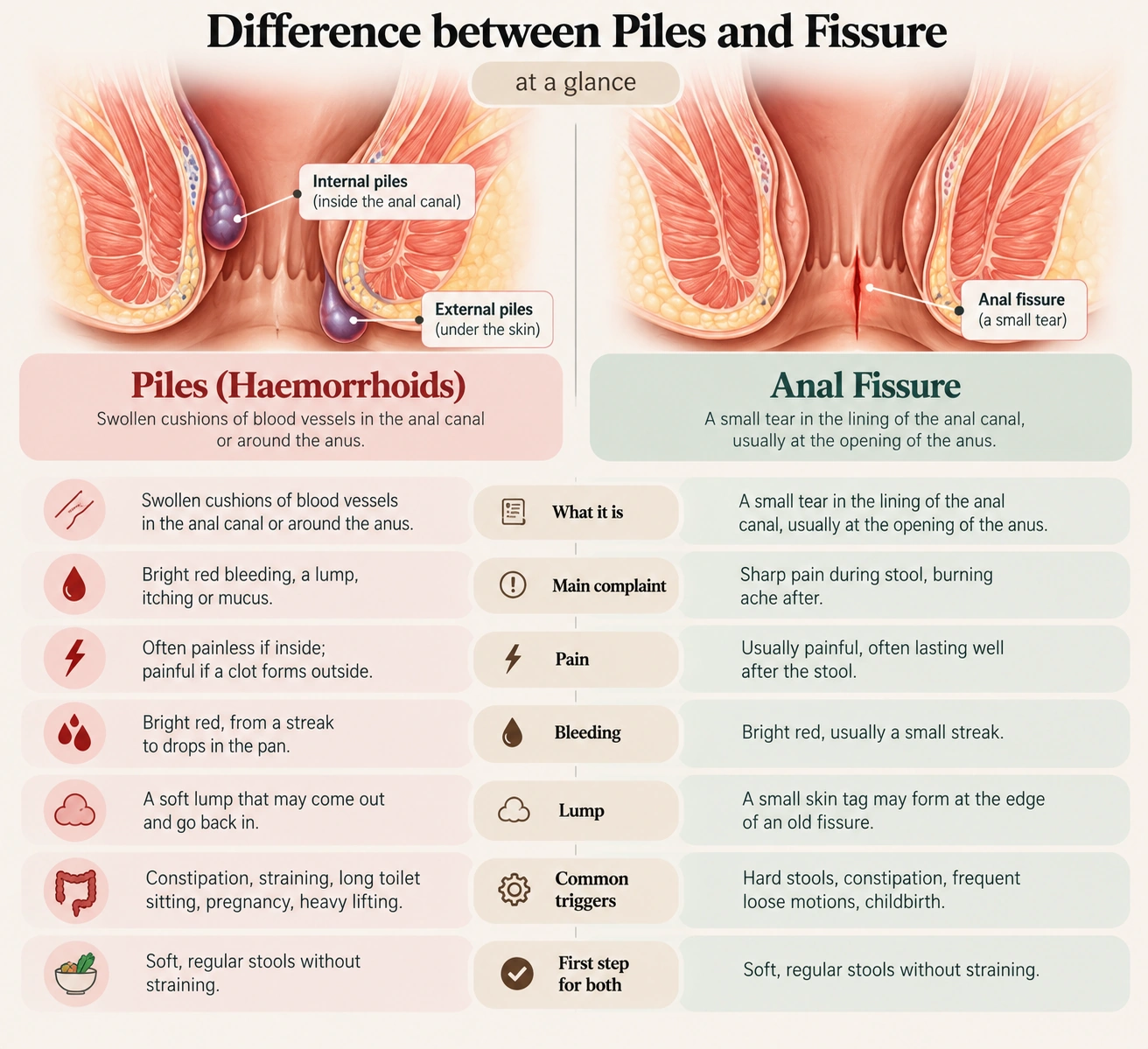
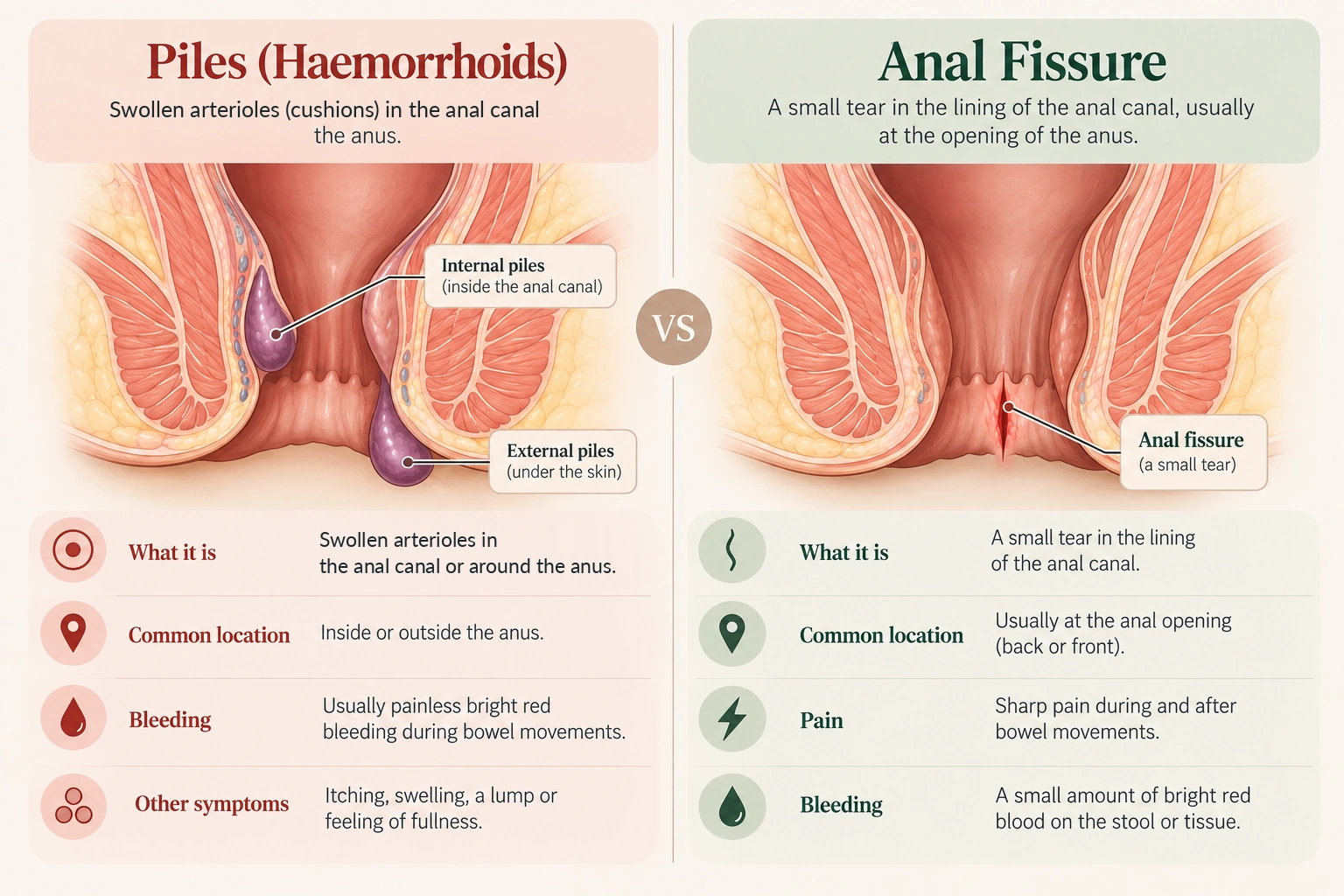
Piles are swollen cushions of blood vessels. A fissure is a cut. That is the core difference between piles and fissure.
Everyone has these cushions. They sit inside the anal canal and help keep it sealed, a bit like the rubber washer that stops a tap from dripping. Straining, long toilet sitting and constipation can make them swell, bleed or slip down. That's when we call them piles, or haemorrhoids.
A fissure is a small tear in the thin skin at the opening of the back passage, usually after a hard stool. Think of cracked heels in winter: every step pulls the crack open again. With a fissure, every bowel movement can reopen the tear before it heals.
In many homes, both are simply called "bawaseer". That one word is where much of the confusion starts.
So how do you tell them apart? The first clue is pain.
"Doctor, it feels like passing broken glass. Is that piles?"
More often, that kind of pain points towards a fissure.
A fissure usually causes a sharp, cutting pain while the stool passes, then a burning ache that can last for hours. Many people start to dread the toilet and hold back stool, which makes the next one harder.
Why does a small tear hurt so much? The ring of muscle around the back passage, the internal sphincter, tends to tighten around a fissure. That tight muscle also squeezes the blood supply, like a rubber band wound too tightly around a finger. Less blood flow means slower healing.
Piles inside the back passage are usually painless, because that lining doesn't feel pain the way skin does. They hurt mainly when a clot forms in an outside pile, or an inside pile slips out and gets stuck: a constant ache with a tender lump, not a sharp cut every time you go.
In my OPD, the pattern of pain often tells me more than anything else.
But what about the blood?
Does the blood look different in piles and fissure?
Not really, and this is where many people go wrong.
Both usually cause bright red blood on the tissue, on the stool or in the pan. Fissure bleeding is usually a small streak or drops; piles can range from a drop to splash. And bleeding can also come from problems higher up the bowel, such as inflammatory bowel disease or, less often, bowel cancer.
Someone at home will say, "Thoda blood toh aata hai, sabko hota hai." It is common, yes. But common is not the same as harmless, and I would rather check bleeding once than have you guess for months.
Then there's the lump many people feel while washing.
"Doctor, there's a small lump. Isn't that piles?"
Not always. It can be a pile, or it can be a skin tag next to a long-standing fissure.
A fissure that stays beyond about six months is called chronic. The skin at its outer edge can swell into a small tag, sometimes called a "sentinel pile", even though it isn't a pile at all. People feel it, assume it's piles, and keep applying piles cream with no response.
A pile lump behaves differently. It may come out after passing stool and go back on its own, or need a gentle push. A pile with a clot feels like a firm, tender, sometimes bluish lump that appears suddenly.
Can you have piles and fissure at the same time?
Yes. Both share the same triggers, hard stools and straining, so they can show up together.
When both are present, the plan is to handle both. It's also why one doctor may say "piles" and another "fissure" for the same person. Sometimes both are right.
Why didn't the cream from the chemist work?
Because a piles cream is not designed to heal a tear held tight by a muscle in spasm.
Over-the-counter piles creams may ease itching and soothe the area. A fissure that isn't healing usually needs that tight muscle to relax so blood can reach the tear, which is done with prescription ointments after an examination. I don't promise that any cream will heal a fissure that has been there for months.
Difference between piles and fissure treatment: what actually helps?
For both, the first step is the same: soft, regular stools without straining. That means fibre from dal, vegetables, fruit and whole grains, plenty of water, and not scrolling your phone on the toilet, also everyday brisk walk for 30mins.
Fissure treatment usually starts with soft stools, a warm sitz bath after passing stool (sitting in a tub of plain warm water), pain relief your doctor advises, and prescription ointments that relax the sphincter muscle. Many fresh fissures heal with this. If a fissure lasts beyond about six months or keeps, fissurectomy surgery, depending on the clinical findings, may be needed.
Piles treatment depends on the type and size:
- small piles often settle with dietary and lifestyle modifications and a short course of medicine
- internal or larger piles that stay outside, or keep returning, may need surgery such as haemorrhoidectomy
If you take blood thinners, mention it before any procedure.
A neighbour may warn, "Operation mat karwana, baad mein phir se ho jaata hai." I won't pretend piles can never return, especially if constipation continues. But most piles and fissures don't need an operation, and when one is needed, keeping stools soft with lifestyle modification afterwards matters as much as the procedure.
What I check when you come to the clinic
I know this is an awkward visit. Many people apologise before the examination, and there is no need.
- History. When the pain comes, how long it lasts, what the bleeding looks like, bowel habits, diet, medicines, pregnancies and family history of bowel disease.
- A gentle examination. If a painful fissure looks likely, I keep the first look gentle, often just parting the skin to see the tear, and then gently do an internal examination that would not hurt. For piles, a small instrument called a proctoscope shows the cushions inside.
- Tests only when needed. If your age, family history, bleeding pattern or other symptoms raise concern, I may advise a colonoscopy. Not everyone needs one.
- A shared decision. I explain what I found, what we can try first, and what happens if it doesn't settle.
When is it fine to wait and try simple steps first?
Quite often. A fresh fissure or a small bleeding pile after a constipated week often settles with soft stools, water, sitz baths and time. If things aren't better within about a week, get examined.
Usually fine to start with home care:
- mild pain or a small streak of bright red blood after a hard stool, improving each day
- mild itching, or a soft lump that goes back in on its own
See a doctor soon if:
- pain during stool isn't better after a week of home care, or you've started holding back stool out of fear
- bleeding keeps returning, or a lump won't go back in
- a sudden, very painful, hard lump appears near the opening
- there is swelling, throbbing pain, fever or pus may also suggest an anorectal abscess and should be assessed promptly.
- blood is mixed into the stool, the stool looks dark or black, your bowel habit has changed for weeks, or you have weight loss or unusual tiredness
- bleeding is heavy, won't stop or has large clots (go to an emergency department straight away)
Questions I get asked frequently
"Which is more painful, piles or fissure?"
Usually a fissure. Its pain is sharp during the stool and can burn for hours afterwards. Piles inside the back passage are often painless unless a clot forms or a pile gets stuck outside.
"Do piles and fissure go away on their own?"
Many do, especially when stools are kept soft. A fissure lasting beyond about six weeks, or piles that keep bleeding or slipping out, usually need a doctor's treatment.
"Can fissure surgery affect bowel control?"
No. There is only urgency in the initial post operative period, and it is usually temporary. That's why the decision comes after a careful examination and a talk about your history.
"Should I see my family doctor or a colorectal surgeon?"
Your family doctor is a good start. If it isn't settling, keeps returning, or the bleeding needs looking into, a colorectal surgeon (also called a proctologist) can examine you and discuss every option.
The Right Treatment Starts with the Right Diagnosis
Remember that train ride when sitting comfortably felt impossible? You had a cream in your bag, but you still didn't know if it was right for your problem.
Piles and fissures can cause similar symptoms, but they don't always need the same treatment. A proper examination can identify the cause and help you avoid treatments that may not work.
If you're experiencing pain during bowel movements, recurring bleeding, or a lump around the anal opening, don't keep guessing or trying different creams.
If you see symptoms, you can see me to understand what's causing your discomfort and explore the right treatment options.