
Early Stage Pilonidal Sinus: First Signs, What It Looks Like and Treatment
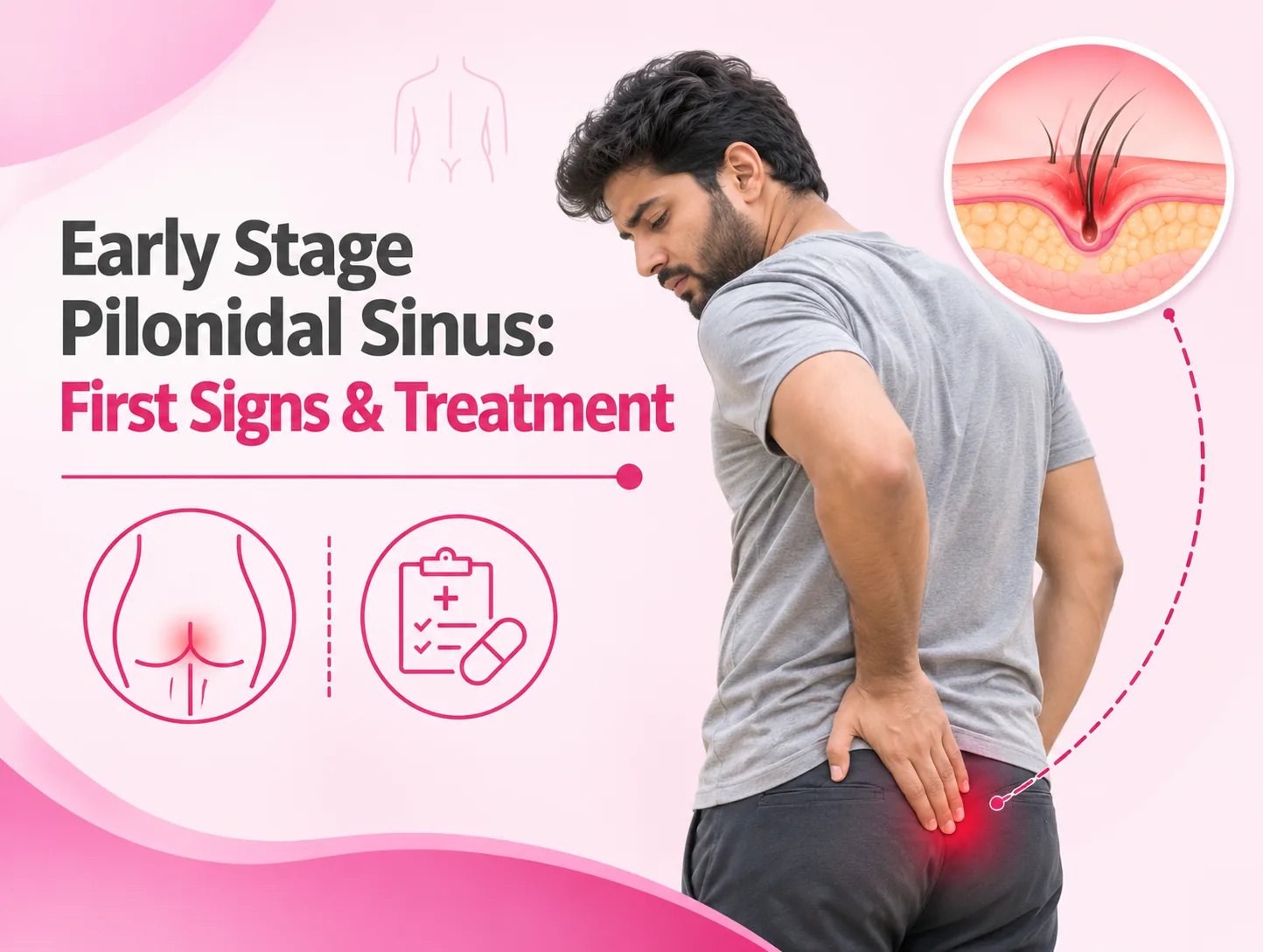
You notice a small lump near your tailbone. It hurts a little when you sit, but the pain goes away when you stand. Maybe you have spotted a tiny hole in the skin just above your buttocks.
Could it be an ingrown hair? A boil? Or something that needs treatment?
These can be the first signs of a pilonidal sinus. In the early stages, it may cause very little discomfort. Some people do not even know they have one until the area becomes infected.
So, how can you tell whether that small spot needs attention? And if it is an early stage pilonidal sinus, does it always need surgery?
Let's start with what happens beneath the skin.
What Is an Early Stage Pilonidal Sinus?
A pilonidal sinus is a small hole or tunnel that forms under the skin, usually at the top of the gap between your buttocks, near the tailbone.
Loose hair can get trapped in the skin. Friction and pressure may push it deeper, causing irritation. Over time, a small opening or tunnel may form.
At first, you might notice nothing more than a tiny pit in the skin. There may be no pain, swelling or discharge.
Doctors often use the term early stage to describe mild disease, but no single staging system applies to everyone.
The important question is whether the area is causing symptoms or has become infected. That helps decide what treatment, if any, you need.
What Are the First Signs of a Pilonidal Sinus?
The first signs are easy to miss. After all, how often do you check the skin near your tailbone?
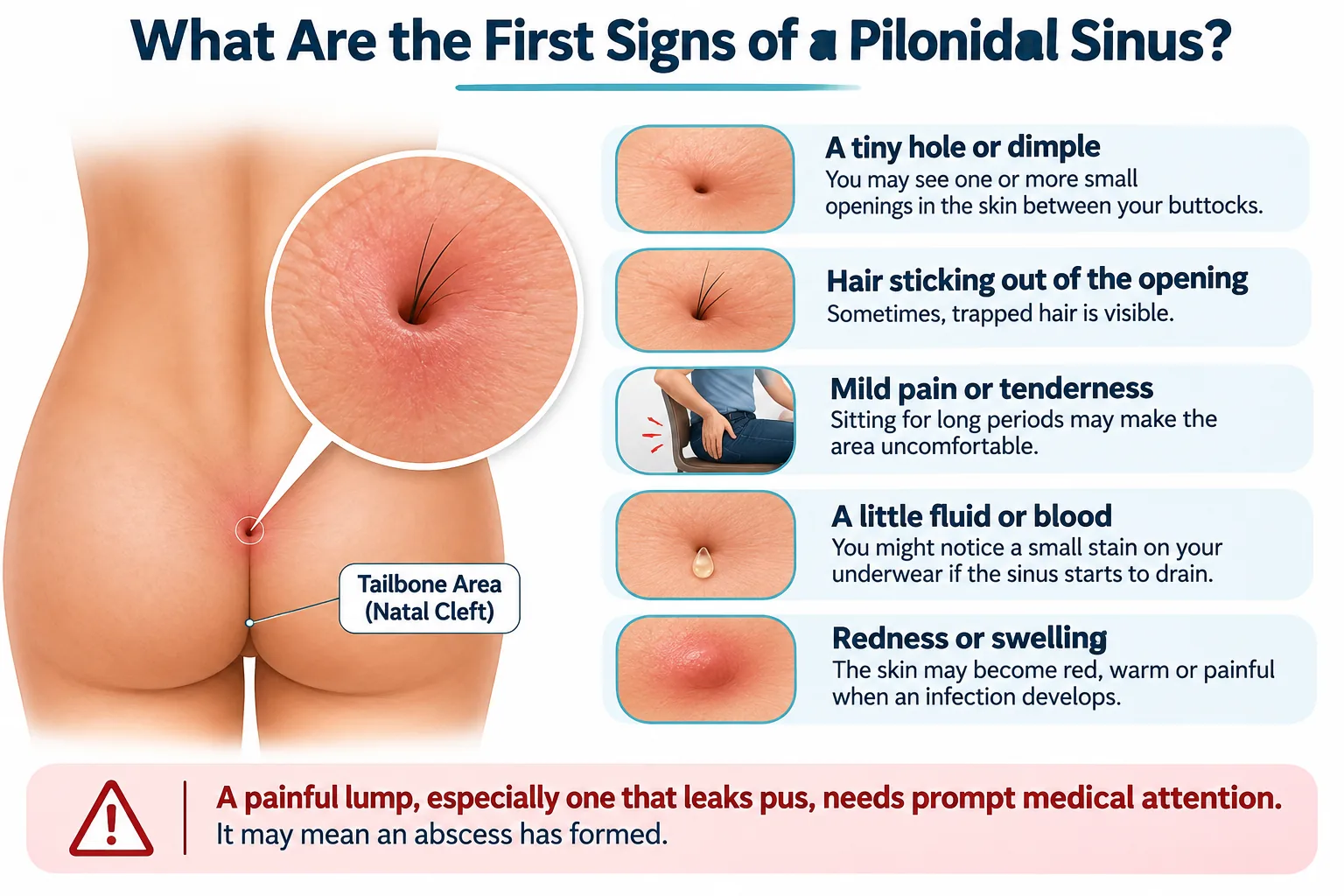
Here are some changes you might notice:
- A tiny hole or dimple: You may see one or more small openings in the skin between your buttocks.
- Hair sticking out of the opening: Sometimes, trapped hair is visible.
- Mild pain or tenderness: Sitting for long periods may make the area uncomfortable.
- A little fluid or blood: You might notice a small stain on your underwear if the sinus starts to drain.
- Redness or swelling: The skin may become red, warm or painful when an infection develops.
Not everyone experiences these symptoms in the same order. A small pit can remain painless, while another person may first notice a swollen, painful lump.
A painful lump, especially one that leaks pus, needs prompt medical attention. It may mean an abscess has formed.
What Does an Early Stage Pilonidal Sinus Look Like?
In its mildest form, a pilonidal sinus may look like a tiny pinhole or dark dimple in the skin. It usually appears along the centre of the gap between the buttocks.
You may also notice a small patch of irritated skin or an opening with hair inside it.
As infection develops, its appearance can change. The area may become raised, red and swollen. Sometimes, pus or blood drains from the opening.
It can look similar to a pimple or boil. That is why appearance alone cannot confirm the diagnosis.
A doctor can check whether the opening is a pilonidal sinus or another skin problem.
Why Does a Pilonidal Sinus Develop?
Hair and friction play an important role. But having a pilonidal sinus does not mean you have poor personal hygiene.
Certain factors may increase the risk:
- Thick or coarse body hair
- Sitting for long hours
- Friction around the tailbone
- A deep cleft between the buttocks
- Excess body weight
- A family history of pilonidal disease
Young adults develop this condition more often, although it can affect people of other ages.
You cannot control every risk factor. What matters is recognising changes and caring for the affected area.
Can an Early Stage Pilonidal Sinus Heal Without Surgery?
If a pilonidal sinus causes no pain, swelling, discharge or infection, you may not need surgery. A doctor may recommend keeping the area clean and watching for changes.
This is called watchful waiting.
However, there is a difference between having no symptoms and having a sinus that has completely disappeared.
A sinus tunnel may remain beneath the skin even when it does not hurt. If it becomes infected, symptoms can return.
And if you already have a painful swelling filled with pus, waiting for it to burst is not a good treatment plan. An abscess usually needs medical drainage.
The NHS guidance on pilonidal sinus explains that treatment is generally unnecessary when there are no signs of infection. Your symptoms and examination findings determine the next step.
Early Stage Pilonidal Sinus Treatment: What Are Your Options?
There is no single treatment that suits everyone.
A painless opening and a swollen, infected lump are two different situations. We examine the area before recommending what to do.
1. Observation and Skin Care
If a pilonidal sinus isn't causing problems, observation may be enough.
We may advise you to keep the area clean, dry it gently and return for an examination if symptoms appear.
Do not try to dig out trapped hair or squeeze a lump yourself.
2. Medicines for Infection
If the surrounding skin becomes inflamed with mild infection, a doctor may prescribe antibiotics in certain cases.
But antibiotics cannot remove an existing sinus tunnel. They also cannot reliably drain a pocket of pus.
So, even if the pain improves after taking medicines, you may still need another treatment if the problem continues.
3. Drainage of a Pilonidal Abscess
Suppose the area suddenly becomes swollen and very painful. You cannot sit comfortably, and the lump feels warm.
This may be a pilonidal abscess, which is a collection of pus beneath the skin.
A surgeon usually treats it by making a small opening to drain the pus with complete excision of the sinus tract. The open wound heals within a few weeks. However, it can still develop a sinus again which needs to be dealt with reconstructive procedures.
4. Surgery for a Persistent Pilonidal Sinus
If you keep having pain, discharge or repeated infections, your surgeon may discuss a procedure to treat the sinus.
MRI of the sacrococcygeal area with contrast is the investigation of choice to rule out involvement of the tailbone.
Options include removing the affected tunnel and tissue. Depending on the wound, the surgeon may leave it open to heal or close it using stitches or a flap of nearby skin.
Some patients with limited disease may also be suitable for smaller procedures.
The right choice depends on how far the sinus extends, whether it has returned before and the condition of the surrounding skin. Read more about pilonidal sinus surgery.
The European Society of Coloproctology guidelines recommend choosing treatment based on the type and extent of the disease, rather than treating every case the same way.
What Can You Do at Home in the Early Stage?
If you have noticed a small opening or mild discomfort, a few simple habits can help you care for the area while you arrange an assessment.
Keep the area clean. Wash gently during your regular bath or shower. Dry the skin carefully afterwards.
Avoid squeezing the lump. Trying to pop it like a pimple can irritate the skin and may worsen an infection.
Take breaks from prolonged sitting. If sitting makes the area sore, stand up and move around when possible.
Ask about hair removal. Hair control may form part of your treatment plan, but the method matters. Do not shave an inflamed area without medical advice.
These steps can help with skin care. They do not remove an established sinus tunnel or replace treatment for an abscess.
When Should You See an Anorectal Surgeon?
You do not need to wait until the pain becomes unbearable.
Arrange a consultation if you notice a hole near your tailbone, repeated discomfort or discharge that keeps coming back.
Seek prompt medical attention if you have:
- A painful, swollen lump near your tailbone
- Pus or blood coming from the area
- Redness that is spreading
- Pain that makes sitting or walking difficult
- Fever or a feeling of being unwell along with the swelling
If you develop high fever, severe spreading redness or feel seriously unwell, seek urgent care.
An Anorectal Surgeon can examine the area and check whether the symptoms come from pilonidal disease or another condition, such as an infected skin cyst or an anal fistula.
What Happens During a Pilonidal Sinus Examination?
If you feel embarrassed about showing the affected area, that is understandable. But an examination is usually straightforward.
The doctor will ask when the symptoms started, whether you have noticed discharge and whether the problem has happened before.
Next, they will gently examine the skin near your tailbone, looking for small pits, trapped hair, swelling or signs of infection.
If treatment is needed, the surgeon will explain the options and what recovery may involve.
Before deciding on a procedure, you can ask about wound care, time away from work, and the chance of the condition returning.
Frequently Asked Questions About Early Stage Pilonidal Sinus
Can an early stage pilonidal sinus go away on its own?
A painless pilonidal sinus may remain quiet without causing problems. In such cases, doctors may recommend observation rather than surgery. However, an established sinus tunnel does not always disappear on its own. If you notice repeated pain, swelling or discharge, have it examined.
How long can a pilonidal sinus remain in the early stage?
There is no fixed timeline. Some people have a small, painless opening for years without any trouble. Others develop an infection much sooner. You cannot predict when symptoms will appear simply by looking at the size of the opening.
Can antibiotics cure an early stage pilonidal sinus?
Antibiotics may help when there is a bacterial infection, but they do not remove the sinus tunnel. If an abscess has formed, you usually need drainage. Don't start antibiotics on your own, as the right treatment depends on what the doctor finds during an examination.
Is an early stage pilonidal sinus painful?
Not always. You might have a small opening without any pain. When irritation or infection develops, the skin may become tender. Pain can increase as swelling builds up, especially when you sit. Severe or increasing pain needs medical assessment.
Is a pilonidal sinus the same as piles?
No. Piles are swollen blood vessels in or around the anus. A pilonidal sinus usually develops higher up, near the tailbone, in the gap between the buttocks. They affect different areas and need different treatment. If you are unsure where the swelling comes from, an examination can help.
Can a pilonidal sinus come back after treatment?
Yes. Pilonidal disease can return even after treatment, although the risk differs between procedures and patients. Follow-up care and the right hair-management plan may help reduce that risk. Ask your surgeon what you can do after healing to lower the chance of another episode.
A Small Opening Deserves the Right Attention
Finding a small hole or lump near your tailbone does not mean you will need an operation. Some pilonidal sinuses remain painless and need only observation.
But repeated discharge, increasing pain or swelling should not be ignored.
The earlier you understand the cause, the easier it is to make an informed decision about treatment.
Dr. Riti Shah is a Consultant Colorectal Surgeon practising anorectal surgery in South Mumbai. Her clinical services include assessment and surgical management of pilonidal sinus disease. You can read more about the condition on her pilonidal sinus information page.
This article provides general health information. It cannot replace a medical examination or advice based on your individual condition.